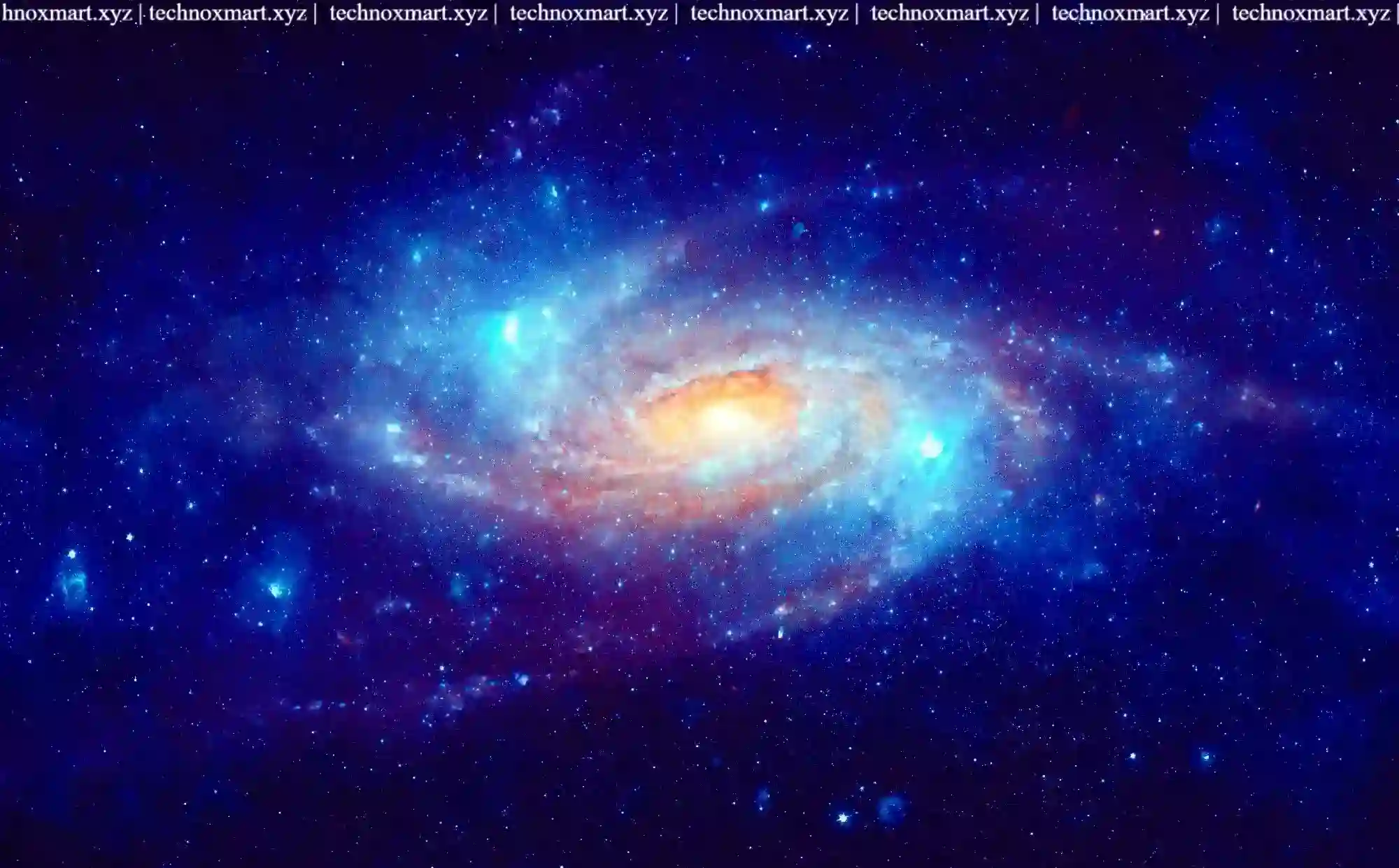
New DESI data cast doubt on the conventional Lambda-CDM model by suggesting that galaxies are retreating more quickly than anticipated.
Dark energy, the enigmatic force responsible for the universe’s accelerated expansion, is seen as a continuous backdrop in the conventional Lambda-CDM model. However, recent observations from the Dark Energy Spectroscopic Instrument (DESI) point to a discrepancy with this theory: galaxies seem to be retreating a little quicker than expected. According to a recent preprint, the discrepancy might be resolved by considering space as a viscous “sticky fluid.” According to this theory, the universe could be “stickier” than previously believed, with a ghostly viscosity impeding its expansion.
The viscous fluid of space
The vacuum may have a “bulk viscosity,” or a little drag on cosmic expansion, accordingto Khan’s article. Viscosity, for instance, is comparable to the difference between pouring water and honey; when space expands, it becomes somewhat sticky. According to his theory, space is an elastic medium whose viscosity is produced by microscopic longitudinal “phonon” vibrations, or sound waves in a vacuum.
You will also like these ▼
☞ By 2035, self-driving cars might prevent more than a million traffic accidents nationwide.
☞ Researchers Create Neuromorphic “E-Skin” to Provide Pain Reflexes to Humanoid Robots
☞ NASA Finds Starquakes in a Red Giant Circling One of the Quietest Black Holes in the Galaxy
☞ Battery Innovation Increases Stability and Charging Efficiency with New Carbon Material
☞ The Arctic Report Card identifies new risks, record heat, and rapid warming.
☞ OpenAI and Anthropic Offer Certain Users a Double Usage Limit Through the New Year
☞ NASA’s Approach to Medical Emergencies on the International Space Station: “No Doctors in Space”
The model is said to match DESI data; the observed cosmic slowing is consistent with the phantom barrier that would restrict expansion. DESI discoveredthat galaxies are retreating somewhat more quickly than Lambda-CDM predicts, which might ease a notable tension.
Consequences and prospects
Khan’s preprint should be handled carefully because it is unpublished and unreferenced. “We should approach cautiously—this is only a hypothesis,” warns Sutter. If true, this theory would represent “a paradigm shift in our understanding of the nature of the vacuum of space.” Future research using the Euclid and DESI telescopes is required to confirm if these “spectres” accurately describe the expansion of our universe. The “Lambda CDM model” is currently in its customary position.
𝑭𝒐𝒓 𝑹𝒆𝒈𝒖𝒍𝒂𝒓 & 𝑭𝒂𝒔𝒕𝒆𝒔𝒕 𝑻𝒆𝒄𝒉 𝑵𝒆𝒘𝒔 𝒂𝒏𝒅 𝑫𝒆𝒂𝒍𝒔&𝑶𝒇𝒇𝒆𝒓𝒔, 𝑭𝒐𝒍𝒍𝒐𝒘 𝑻𝑬𝑪𝑯𝑵𝑶𝑿𝑴𝑨𝑹𝑻𝒐𝒏 𝑻𝒘𝒊𝒕𝒕𝒆𝒓, 𝑭𝒂𝒄𝒆𝒃𝒐𝒐𝒌, 𝑰𝒏𝒔𝒕𝒂𝒈𝒓𝒂𝒎, 𝑮𝒐𝒐𝒈𝒍𝒆 𝑵𝒆𝒘𝒔 𝒂𝒏𝒅 𝑺𝒖𝒃𝒔𝒄𝒓𝒊𝒃𝒆 𝑯𝒆𝒓𝒆 𝑵𝒐𝒘. 𝑩𝒚 𝑺𝒖𝒃𝒔𝒄𝒓𝒊𝒃𝒊𝒏𝒈 𝒀𝒐𝒖 𝑾𝒊𝒍𝒍 𝑮𝒆𝒕 𝑶𝒖𝒓 𝑫𝒂𝒊𝒍𝒚 𝑫𝒊𝒈𝒆𝒔𝒕 𝑯𝒆𝒂𝒅𝒍𝒊𝒏𝒆𝒔 𝑬𝒗𝒆𝒓𝒚 𝑴𝒐𝒓𝒏𝒊𝒏𝒈 𝑫𝒊𝒓𝒆𝒄𝒕𝒍𝒚 𝑰𝒏 𝒀𝒐𝒖𝒓 𝑬𝒎𝒂𝒊𝒍 𝑰𝒏𝒃𝒐𝒙. 𝗝𝗼𝗶𝗻 𝗢𝘂𝗿 𝗪𝗵𝗮𝘁𝘀𝗔𝗽𝗽 𝗖𝗵𝗮𝗻𝗻𝗻𝗲𝗹𝘀 𝗙𝗼𝗿 𝗡𝗲𝘄𝘀 & 𝗥𝗲𝗮𝗹 𝗧𝗶𝗺𝗲 𝗗𝗲𝗮𝗹 𝗔𝗹𝗲𝗿𝘁𝘀.