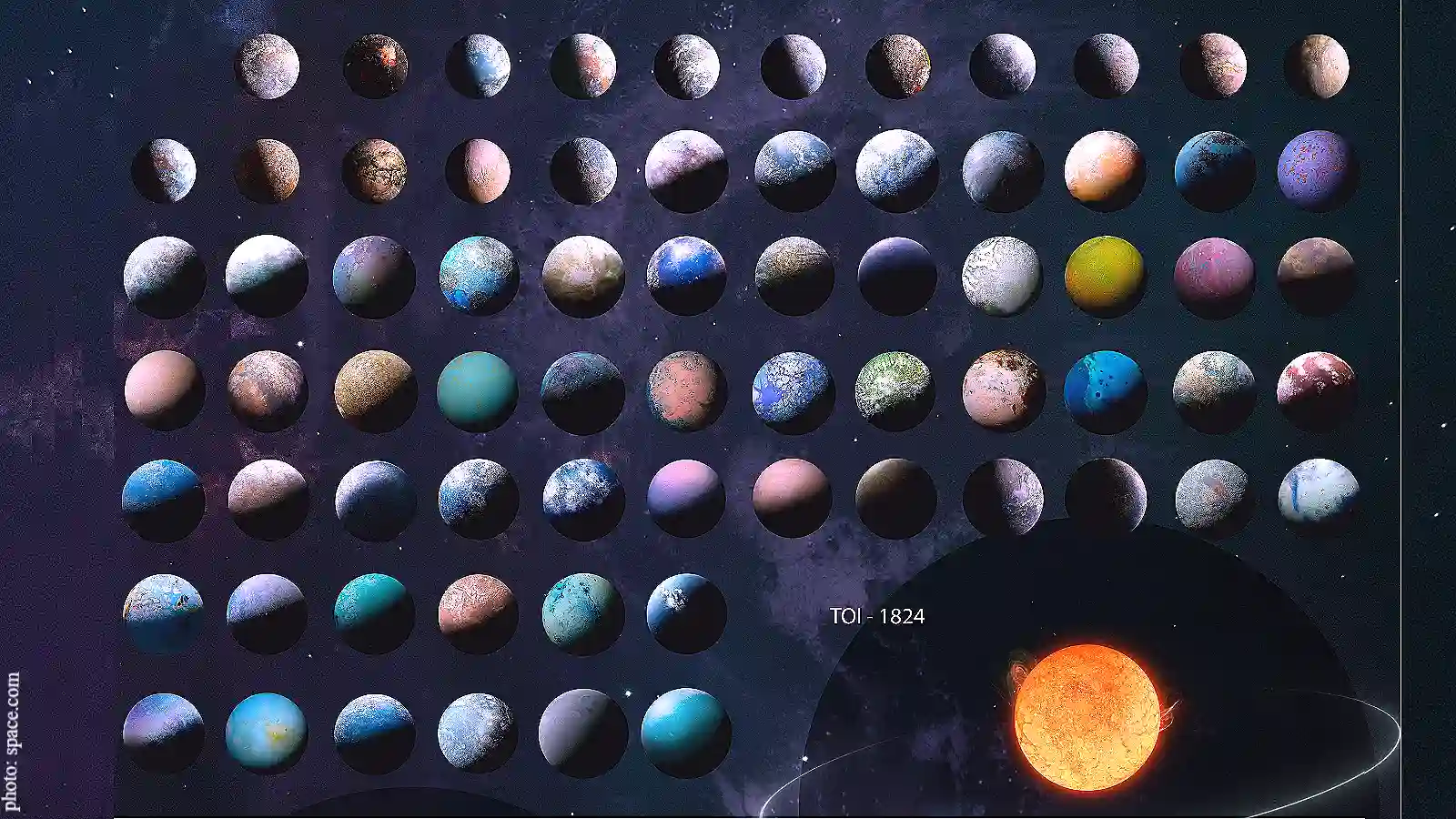
2025 saw the discovery of exoplanets, which showed odd worlds, hints about how planets develop, and striking planetary lifecycles.
When more than 6,000 exoplanets outside of our solar system were verified in 2025, astronomers celebrated a significant milestone that demonstrated how rapidly the field had grown since its beginning thirty years prior. The discoveries revealed a galaxy full of unexpected worlds, thanks in great part to NASA’s Kepler spacecraft and the Transiting Exoplanet Survey Satellite. Planets orbiting two suns, rocky worlds strewn across space with debris, and strange atmospheres where none should be found were all observed by astronomers. When combined, these findings showed that the planetary systems around the Milky Way are significantly more varied and extreme than our solar system.
From Tatooine Worlds to K2-18b: Exoplanet Findings That Aroused Interest and Discussion
Some of the most unexpected discoveries of the year came from planets circling binary stars, according to a Space.com article. Numerous “Tatooine-like” worlds have been discovered by astronomers, such as 2M1510 (AB) b, a planet that circles two brown dwarfs around 120 light-years distant. An odd wobble in the stars’ motion led to the discovery of its inclined orbit, which suggeststhat it has experienced a turbulent past interspersed with close encounters with other stars.
Last year, data from NASA’sJames Webb Space Station revealed the existence of life-related chemicals in K2-18b, which sparked a heated debate. Later research, however, highlighted this shortcoming of modern technology by explaining them with non-life-related explanations.
You will also like these ▼
☞ NASA Finds Starquakes in a Red Giant Circling One of the Quietest Black Holes in the Galaxy
☞ Battery Innovation Increases Stability and Charging Efficiency with New Carbon Material
☞ The Arctic Report Card identifies new risks, record heat, and rapid warming.
☞ ISS astronauts send messages to Earth and celebrate Christmas in orbit.
☞ OpenAI and Anthropic Offer Certain Users a Double Usage Limit Through the New Year
Planetary Insights for 2025: From Rocky Worlds to Stars Ripping Planets Apart
Nearby systems, such as the one around Proxima Centauri, were better visible thanks to modern sensors, which also made it possible to locate tiny rocky planets around the closest star to the sun. Astronomers discovered planets that were so near to their stars that they were being torn apart and losing lengthy, dusty or gassy tails similar to comets.
2025 provided unique insights into every phase of a planet’s existence, demonstrating how much is still unknown, from young giant planets still forming to old stars ripping apart planetary remnants.
𝑭𝒐𝒓 𝑹𝒆𝒈𝒖𝒍𝒂𝒓 & 𝑭𝒂𝒔𝒕𝒆𝒔𝒕 𝑻𝒆𝒄𝒉 𝑵𝒆𝒘𝒔 𝒂𝒏𝒅 𝑫𝒆𝒂𝒍𝒔&𝑶𝒇𝒇𝒆𝒓𝒔, 𝑭𝒐𝒍𝒍𝒐𝒘 𝑻𝑬𝑪𝑯𝑵𝑶𝑿𝑴𝑨𝑹𝑻 𝒐𝒏 𝑻𝒘𝒊𝒕𝒕𝒆𝒓, 𝑭𝒂𝒄𝒆𝒃𝒐𝒐𝒌, 𝑰𝒏𝒔𝒕𝒂𝒈𝒓𝒂𝒎, 𝑮𝒐𝒐𝒈𝒍𝒆 𝑵𝒆𝒘𝒔 𝒂𝒏𝒅 𝑺𝒖𝒃𝒔𝒄𝒓𝒊𝒃𝒆 𝑯𝒆𝒓𝒆 𝑵𝒐𝒘. 𝑩𝒚 𝑺𝒖𝒃𝒔𝒄𝒓𝒊𝒃𝒊𝒏𝒈 𝒀𝒐𝒖 𝑾𝒊𝒍𝒍 𝑮𝒆𝒕 𝑶𝒖𝒓 𝑫𝒂𝒊𝒍𝒚 𝑫𝒊𝒈𝒆𝒔𝒕 𝑯𝒆𝒂𝒅𝒍𝒊𝒏𝒆𝒔 𝑬𝒗𝒆𝒓𝒚 𝑴𝒐𝒓𝒏𝒊𝒏𝒈 𝑫𝒊𝒓𝒆𝒄𝒕𝒍𝒚 𝑰𝒏 𝒀𝒐𝒖𝒓 𝑬𝒎𝒂𝒊𝒍 𝑰𝒏𝒃𝒐𝒙. 𝗝𝗼𝗶𝗻 𝗢𝘂𝗿 𝗪𝗵𝗮𝘁𝘀𝗔𝗽𝗽 𝗖𝗵𝗮𝗻𝗻𝗻𝗲𝗹𝘀 𝗙𝗼𝗿 𝗡𝗲𝘄𝘀 & 𝗥𝗲𝗮𝗹 𝗧𝗶𝗺𝗲 𝗗𝗲𝗮𝗹 𝗔𝗹𝗲𝗿𝘁𝘀.