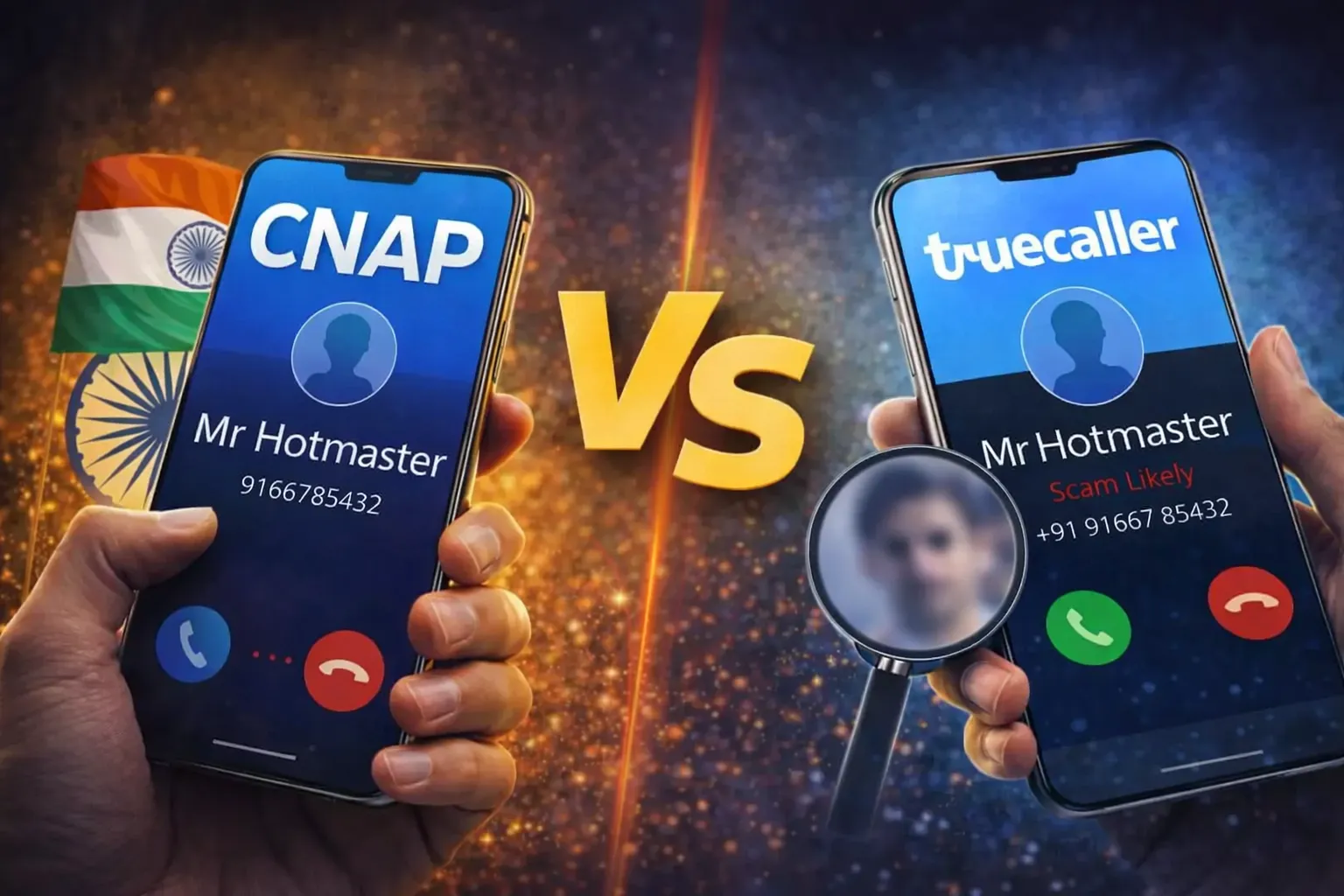
While Truecaller uses community data to detect and reject spam, CNAP uses telecom networks to provide confirmed caller names.
CNAP vs. Truecaller: The Telecom Regulatory Authority of India (TRAI) has launched Caller Name Presentation (CNAP), which displays the identities of unknown callers on your phone without requiring you to download an app or purchase a subscription. It began a broader testing phase last month and is currently being made available to people in a staggered rollout. Many have questioned if caller ID apps like Truecaller would become obsolete since the technology’s introduction. But the truth is more complex.
CNAP: What Is It?
According to TRAI, CNAPis a system that allows consumers to view the official registered name of the caller upon receiving a call. In contrast to standard network caller ID, which usually merely displays the number, CNAP matches the caller’s number to the name linked to that SIM during registration using the KYC-verified subscriber information stored by telecom providers.
With ambitions to eventually extend to previous technologies, the CNAP architecture is being implemented in stages across 4Gand 5Gnetworks. Users may see the name on the screen as calls come in since it is taken straight from the telecom operator’s database and does not require Internet connectivity or third-party appsfor basic name display. Wider availability is anticipated through a phased deployment by March or April 2026, and several telecom firms have already started testing it in certain areas.
Through the telecom infrastructure itself, CNAP functions at the network level. Every operator has a database that connects registered identities and phone numbers from formal KYC data, including documents submitted upon SIM activation. The network automatically obtains and shows the confirmed name when someone calls. Additionally, TRAI has made it possible for consumers to opt out through Calling Line Identification Restriction (CLIR) settings if they would rather not have their name shown.
The main goal of CNAP is to provide an integrated, standardized, and verified caller ID across networks without needing the download of an app or depending on community data that is crowdsourced. Within months of the initial launch, telecom suppliers have been expected to guarantee device support.
You will also like these ▼
☞ AI Impact Summit 2026: MeitY argues that a small number of companies shouldn’t control AI
☞ According to reports, Samsung will begin producing its next-generation AI memory chip in 2026.
☞ OpenAI and Anthropic Offer Certain Users a Double Usage Limit Through the New Year
☞ According to reports, Nvidia is paying $20 billion to acquire the assets of AI chip designer Groq.
Truecaller: What Is It?
The majority of us are already aware with Truecaller, an Androidand iOScaller ID and spam detection software. Although the Stockholm, Sweden-based platform has many features, including artificial intelligence (AI) capabilities, it gained popularity because of the aforementioned.
Because Truecaller‘s database is constructed using user-generated data and real-time signals from community activity, unlike CNAP, it can classify numbers as spam, business, or personal based on trends seen within its user base. Beyond simply displaying caller names, Truecaller provides features like fraud and spam detection, automated call banning, and worldwide identity searches.
Additionally, Truecallerhas an international company directory that includes verified names, logo badges for reliable numbers, and data such as frequency insights or the purpose for the call. Users must register with a cellphone number in order to utilize its services, and use patterns are used to continuously update its real-time spam lists and community flags.
The Main Distinctions Between CNAP and Truecaller
The source and technique of caller identification are the main distinctions between Truecaller and CNAP. Without requiring an additional app or an Internet connection, CNAP retrieves the caller’s name straight from the telecom operator’s confirmed data. This makes it an integrated network solution that displays the name registered via SIM KYC procedures. Once completely implemented, it is anticipated to be standard across all compatible devices.
In contrast, Truecaller‘s method relies on community-generated and crowdsourced data and is app-based. It requires installation and regular updates, but it enhances caller ID with insights including spam labels, business tags, worldwide coverage, and trends from millions of users. When the number changes ownership or community tags change, Truecaller’s names and tags—which are based on aggregated usage—may not match official KYC names.
Functionality is another distinction. While Truecaller adds layers like spam prevention, fraud rating, call reasons, and community insights that go beyond basic name display, CNAP seeks to generate the verified registered name in real time using networks. Additionally, Truecaller expands its offerings to include voicemail capabilities, contextual search support, and message blocking—all of which are not included in CNAP‘s primary caller name function.
Therefore, CNAP will be a more helpful tool if you are someone who is more concerned with their identity and privacy and is not affected by spam calls. Truecaller is a more potent choice, though, if you like spam detection and other capabilities and feel at ease with the app accessing and keeping your data.
FAQs
What is the code name for CNAP?
Calling Name Presentation, or CNAP for short, is a network-level function that shows the caller’s registered name.
How is the caller’s name obtained via CNAP?
From the telecom operator’s KYC-verified database connected to the caller’s SIM registration, it obtains the name.
Does CNAP require the Internet?
No. For basic caller name display, CNAP operates at the telecom network level and does not require an internet connection.
Which platforms are compatible with Truecaller?
Both iOS and Android smartphones may use Truecaller.
Does Truecaller recognize spam?
Indeed. Truecaller detects and blocks spam and fraudulent calls using user data and community signals.
𝑭𝒐𝒓 𝑹𝒆𝒈𝒖𝒍𝒂𝒓 & 𝑭𝒂𝒔𝒕𝒆𝒔𝒕 𝑻𝒆𝒄𝒉 𝑵𝒆𝒘𝒔 𝒂𝒏𝒅 𝑫𝒆𝒂𝒍𝒔&𝑶𝒇𝒇𝒆𝒓𝒔, 𝑭𝒐𝒍𝒍𝒐𝒘 𝑻𝑬𝑪𝑯𝑵𝑶𝑿𝑴𝑨𝑹𝑻 𝒐𝒏 𝑻𝒘𝒊𝒕𝒕𝒆𝒓, 𝑭𝒂𝒄𝒆𝒃𝒐𝒐𝒌, 𝑰𝒏𝒔𝒕𝒂𝒈𝒓𝒂𝒎, 𝑮𝒐𝒐𝒈𝒍𝒆 𝑵𝒆𝒘𝒔 𝒂𝒏𝒅 𝑺𝒖𝒃𝒔𝒄𝒓𝒊𝒃𝒆 𝑯𝒆𝒓𝒆 𝑵𝒐𝒘. 𝑩𝒚 𝑺𝒖𝒃𝒔𝒄𝒓𝒊𝒃𝒊𝒏𝒈 𝒀𝒐𝒖 𝑾𝒊𝒍𝒍 𝑮𝒆𝒕 𝑶𝒖𝒓 𝑫𝒂𝒊𝒍𝒚 𝑫𝒊𝒈𝒆𝒔𝒕 𝑯𝒆𝒂𝒅𝒍𝒊𝒏𝒆𝒔 𝑬𝒗𝒆𝒓𝒚 𝑴𝒐𝒓𝒏𝒊𝒏𝒈 𝑫𝒊𝒓𝒆𝒄𝒕𝒍𝒚 𝑰𝒏 𝒀𝒐𝒖𝒓 𝑬𝒎𝒂𝒊𝒍 𝑰𝒏𝒃𝒐𝒙. 𝗝𝗼𝗶𝗻 𝗢𝘂𝗿 𝗪𝗵𝗮𝘁𝘀𝗔𝗽𝗽 𝗖𝗵𝗮𝗻𝗻𝗻𝗲𝗹𝘀 𝗙𝗼𝗿 𝗡𝗲𝘄𝘀 & 𝗥𝗲𝗮𝗹 𝗧𝗶𝗺𝗲 𝗗𝗲𝗮𝗹 𝗔𝗹𝗲𝗿𝘁𝘀.