

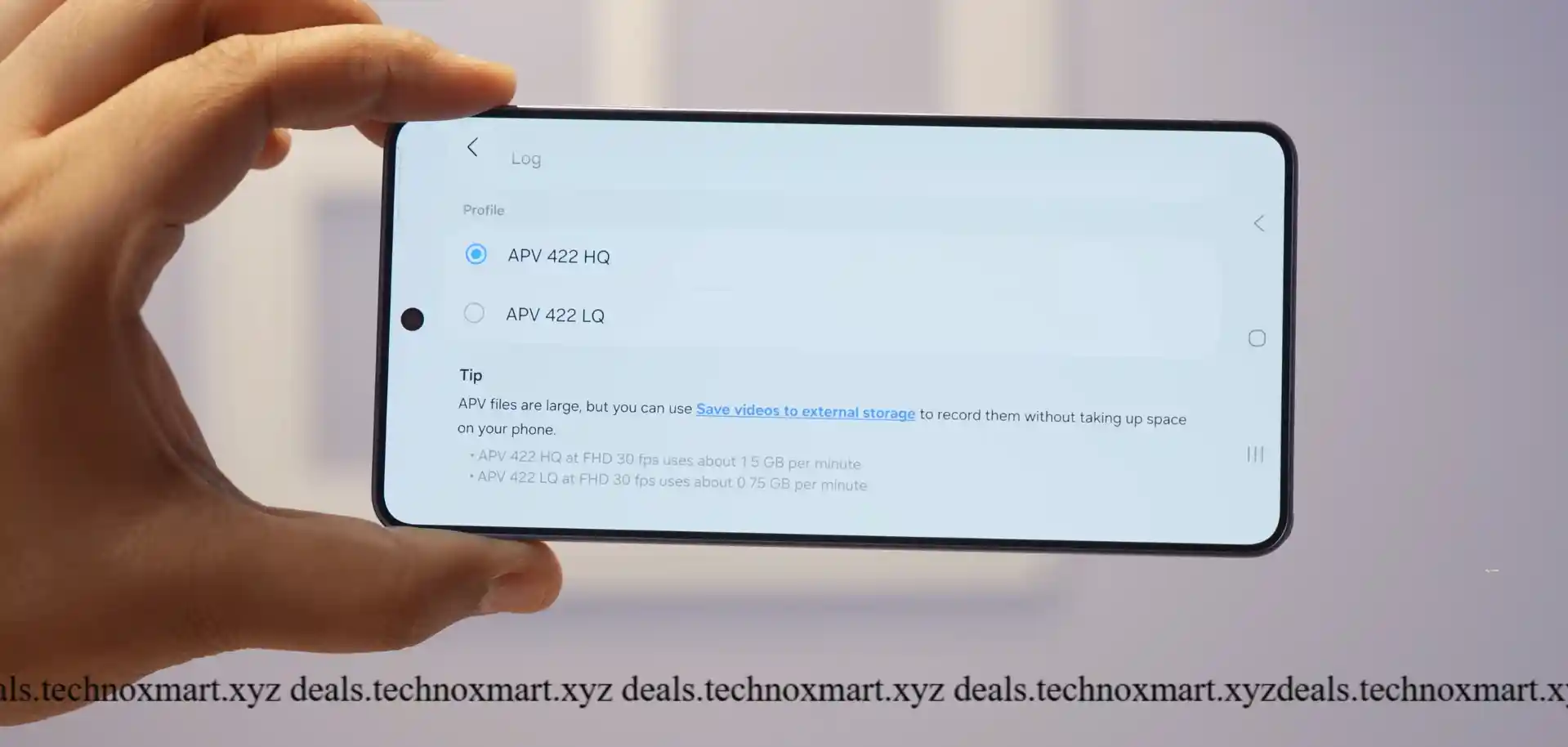
Samsung has officially launched the Samsung Galaxy S26 series, and as expected, the lineup includes:
- Samsung Galaxy S26
- Samsung Galaxy S26 Plus
- Samsung Galaxy S26 Ultra
But this year, Samsung is not just launching a smartphone.
It is launching a positioning strategy.
The phrase Samsung wants you to remember is simple:
“This is an AI Phone.”
Now pause there.
Because this is where the real conversation begins.
Is the Samsung Galaxy S26 Ultra truly an AI smartphone, or is this the beginning of an era where AI becomes the new marketing layer placed on top of premium hardware?
In India, where flagship phones cross ₹1.3 lakh, and in the USA, where $1200+ smartphones compete directly with iPhones, expectations are not small.
At that price, you don’t sell hype.
You sell transformation.
So let’s break it down — layer by layer.
The Smartphone Plateau: Why AI Is the New Battleground
To understand the Galaxy S26 series, you need to understand the industry context.
Smartphones have matured.
- Displays are already excellent.
- Cameras are already powerful.
- Performance is already beyond daily needs.
- Build quality is premium everywhere.
❓So what can brands improve meaningfully?
➤ AI.
Artificial Intelligence is the only frontier left that feels expandable.
📌Apple pushes Apple Intelligence.
📌Google pushes Gemini-powered Pixel AI.
📌Samsung pushes Galaxy AI.
But here’s the difference:
Most brands today are integrating AI tools.
Very few are building AI-native hardware ecosystems.
Samsung sits somewhere in between.
You might also like ⬇️
☞ Nothing Phone (4a) Review: Bigger Battery, Telephoto Zoom & New Glyph Interface
☞ According to reports, DeepSeek and Perplexity AI features power Samsung’s Bixby on OneUI 8.5.
Galaxy S26 Ultra Design: Slimmer, But Strategic
The Galaxy S26 Ultra is now:
- 7.9mm thin
- Lighter than previous Ultra models
- Slightly rounded edges
- Softer frame design
This is refinement, not reinvention.
For Indian and US users who felt the Ultra was bulky, this is a welcome improvement.
But slimness always comes with trade-offs.
And this is where Samsung quietly removed something important.
The S Pen Bluetooth Removal: A Silent Downgrade
To make the phone slimmer:
- The S Pen now inserts in only one direction.
- Bluetooth functionality inside the S Pen has been removed.
Previously, users could:
- Use S Pen as remote shutter
- Control slides during presentations
- Trigger camera actions
Now, those features are gone.
In a ₹1,39,999 flagship, removing features feels uncomfortable.
Thinness is nice.
Functionality is better.
Samsung chose thinness.
That decision says something.
Privacy Display: A Feature That Feels New, But Isn’t Entirely
Samsung introduced the Privacy Display (Flex Magic Pixel Display).
Here’s how it works:
- Viewed directly → crystal clear
- Viewed at 45–50 degrees → fades to grey
- Side peeking prevented
Sounds futuristic.
But in India, ₹50 privacy screen protectors already do this.
In the US, $5 privacy filters exist.
The difference is that Samsung integrated it at the display level.
That matters.
But there’s a cost.

The Compromise of Privacy Mode
Because of this feature:
- Overall brightness drops slightly
- Viewing angles are impacted
- Display vibrancy feels slightly toned down
❓Is it a bad feature?
➤ No.
❓Is it revolutionary?
➤ Also no.
Within 6–12 months, Chinese smartphone brands will likely introduce similar features.
Samsung’s advantage here is timing, not exclusivity.
You might also like ⬇️
☞ According to reports, Samsung will begin producing its next-generation AI memory chip in 2026.
Snapdragon vs Exynos: The Dividing Line Between Markets
Here’s the processor breakdown:
Galaxy S26 Ultra (Global):
- Snapdragon 8 Elite Zen 5 for Galaxy
Galaxy S26 and S26 Plus:
- Exynos 2600 in India and most regions
- Snapdragon in US, China, Japan
The Exynos 2600 is built on 2nm architecture.
On paper, it sounds impressive.
But historically, Snapdragon chips:
- Deliver better sustained performance
- Have more stable GPU output
- Perform better in long gaming sessions
Indian buyers paying ₹86,999+ may question why they don’t get Snapdragon.
US buyers get the premium variant.
This debate isn’t going away anytime soon.
Galaxy AI Under the Microscope
In Part 1, we broke down the design decisions, S Pen downgrade, Privacy Display, and processor divide.
Now we come to the heart of Samsung’s 2026 strategy.
Galaxy AI.
Because make no mistake — the Galaxy S26 series is not being sold as a camera phone or performance phone.
It’s being sold as an AI phone.
So let’s remove the marketing layer and examine what’s really happening.
One UI 8.5 – The Foundation of Samsung’s AI Vision
The Galaxy S26 series runs on:
- One UI 8.5
- Android (latest version)
- 7 years OS updates
- 7 years security updates
This long-term support is genuinely impressive.
For Indian buyers spending over ₹1 lakh, longevity matters.
For US buyers locked into carrier contracts, long support cycles reduce upgrade pressure.
Samsung is playing the long game here.
And strategically, that’s smart.
But software support is not the same as AI capability.
Let’s go deeper.

What Is “Agentic AI” and Why Is Samsung Using That Word?
Samsung introduced a term: Agentic AI.
That sounds futuristic.
But what does it actually mean?
Agentic AI implies that:
- The phone doesn’t just respond to commands.
- It acts intelligently on your behalf.
- It anticipates context.
- It gives proactive suggestions.
For example:
You’re about to leave your house.
The phone:
- Checks traffic automatically.
- Notices weather changes.
- Suggests leaving early.
- Nudges you on the lock screen.
That’s useful.
But let’s be clear:
This is contextual automation powered by AI models — not autonomous AI decision-making.
It’s an enhancement layer.
Not a fundamental shift.
You might also like ⬇️
☞ Lava claims that the next smartphone would include a feature inspired by the Xiaomi 17 Pro.
☞ In a YouTube durability test, the Samsung Galaxy Z TriFold Hinge withstands almost 150,000 folds.
Now Brief – Aggregated Intelligence, Finally
One of the better features in the Galaxy S26 series is Now Brief.
Instead of opening:
- Weather app
- News app
- Health tracking app
- Calendar
- Reminder app
You get a unified summary.
This reduces friction.
And this is where AI actually improves daily usability.
Because smartphones are not limited by hardware anymore.
They’re limited by friction.
Now Brief reduces friction.
This is real value.
But here’s the uncomfortable truth:
This feature could technically exist on previous-generation devices through software updates.
It is not hardware dependent.
Now Nudge – Smart, But Not Magical
Now Nudge gives you:
- Traffic alerts before departure
- Rain alerts before meetings
- Smart typing suggestions
- Lock screen context updates
This is helpful.
But again, it’s incremental.
Google Assistant and Pixel devices have been doing similar contextual suggestions for years.
Samsung has polished it — not reinvented it.
Gemini & Perplexity Integration – Strategic or Necessary?
Samsung integrated:
- Google Gemini
- Perplexity AI
- Conversational Bixby
This gives users:
- Notification summarization
- AI-generated text editing
- Screenshot organization
- Background noise removal in videos
- AI-based image editing
- Creative Studio for AI stickers
These are good features.
But here’s the real question:
❓Did Samsung build proprietary AI infrastructure?
❓Or did it integrate third-party AI engines?
➤ The answer is integration.
And integration is not the same as innovation.
You can download Gemini on many Android devices.
You can use Perplexity separately.
Samsung’s advantage is system-level integration.
Not AI ownership.

On-Device AI vs Cloud AI – The Important Distinction
This is where most buyers don’t look — but experts do.
A true AI phone would:
- Run large language models locally
- Work offline
- Perform reasoning tasks without cloud dependency
- Offer proprietary AI acceleration hardware
Samsung uses a hybrid model:
- Some AI tasks run locally
- Some tasks run via cloud servers
That means:
- Performance depends on internet speed
- Privacy concerns remain
- Offline capability is limited
❓So is this an AI-native phone?
➤ Not yet.
❓It’s an AI-enhanced smartphone.
➤ That’s a different category.
Camera Improvements – Mostly Software Refinement
Now let’s talk about cameras.
Samsung hasn’t dramatically changed hardware.
The Galaxy S26 Ultra still features:
- 200MP main sensor
- 50MP ultrawide
- 10MP 3X telephoto
- 50MP periscope zoom
You might also like ⬇️
☞ OpenAI and Anthropic Offer Certain Users a Double Usage Limit Through the New Year
☞ According to reports, Nvidia is paying $20 billion to acquire the assets of AI chip designer Groq.
☞ For a brief time, Google One and Gemini Annual Plan prices were cut in half: Specifics
What changed?
- Slightly wider aperture
- Improved telephoto light capture
- AI image signal processor
- Better night video
- AV1 video support
- Horizontal lock stabilization
Image quality will be excellent.
But will it look dramatically different from S25 Ultra?
Unlikely.
Samsung is refining — not redefining.
Battery Strategy – Conservative in an Aggressive Market
Now let’s address the battery.
Galaxy S26:
- 4300mAh
- 4900mAh
Galaxy S26 Ultra:
- 5000mAh
In 2026, competitors are offering:
- 5500mAh
- 6000mAh
- Silicon-carbon batteries
- Faster charging
Samsung remains conservative.
60W charging on Ultra is decent.
But not industry-leading.
Samsung seems focused more on stability than numbers.
💬 Safe? Yes.
💬 Exciting? Not really.
Pricing Strategy – Apple-Level Confidence
Let’s talk money.
India pricing:
- ₹86,999 (S26)
- ₹1,19,999 (S26 Plus)
- ₹1,39,999 (S26 Ultra 256GB)
- ₹1,89,999 (Ultra 1TB)
US pricing also positions the S26 Ultra against iPhone Pro Max territory.
This is deliberate.
Samsung is no longer competing with Xiaomi.
It is competing with Apple.
And Apple commands the highest profit margins in the smartphone industry.
Samsung is attempting to reposition itself into that same premium perception tier.
But premium pricing requires:
- Clear hardware leadership
- Unique ecosystem strength
- Or revolutionary innovation
The S26 series offers refinement.
Not revolution.
That creates tension.

The Bigger Strategic Picture
Samsung understands something important.
Hardware innovation has slowed.
AI narrative is the new battlefield.
If Samsung doesn’t push AI aggressively now, Google and Apple will dominate the conversation.
So Samsung took an early step.
It packaged AI features.
It created marketing momentum.
It branded the S26 series as an AI phone.
But this is phase one.
Not the final form.
You might also like ⬇️
☞ Infinix Note Edge 5G Review: Curved AMOLED, 6500mAh Battery & JBL Sound Under ₹20,000 ($220.07)
☞ iQOO 15R Review: 7600mAh Battery Beast with Snapdragon Power & 144Hz AMOLED Display
☞ The iQOO 15R, which has a 144Hz display and a Snapdragon 8 Gen 5 SoC, was released in India.
☞ The Amazfit T-Rex Ultra 2 was released with a 1.5-inch AMOLED display and a BioTracker 6.0 sensor.
The Real AI Future Is Still Coming
We’ve discussed the design refinements, AI integrations, processor divide, camera updates, pricing strategy, and Samsung’s AI narrative.
Now let’s zoom out.
Because the Galaxy S26 series is not just about Samsung.
It’s about where the entire smartphone industry is heading.
And this is where things get interesting.
Apple vs Samsung: Who Wins the AI War?
Samsung is pushing Galaxy AI aggressively.
But Apple is not standing still.
Apple Intelligence is deeply integrated into iOS, tightly optimized for Apple Silicon, and heavily privacy-focused.
Here’s the key difference:
Samsung:
- Hybrid AI model (local + cloud)
- Multiple AI integrations (Gemini, Perplexity)
- Android ecosystem flexibility
Apple:
- Vertical integration (hardware + software)
- Controlled ecosystem
- Deep OS-level optimization
If Apple pushes more on-device AI processing in the next iPhone generation, Samsung’s hybrid model could look less advanced.
Right now, Samsung has the momentum.
But long-term?
Apple’s ecosystem control may give it the edge.
Google Pixel vs Galaxy S26: The AI Purity Debate
Now let’s talk about Pixel.
Google Pixel phones run AI features at a deeper system level.
Gemini is not just integrated — it’s native.
Pixel devices often get AI features first.
Samsung integrated Gemini.
Google owns Gemini.
That difference matters.
If Google decides to expand Gemini capabilities exclusively on Pixel first, Samsung may always be slightly behind in core AI evolution.
Samsung’s strength is scale.
Google’s strength is AI ownership.
Two different power positions.
The 2027–2028 AI Smartphone Shift
Here’s where we go bold.
The Galaxy S26 series is not the AI revolution.
It is the pre-revolution phase.
In the next 2–3 years, we will likely see:
- On-device LLMs running fully offline
- Smartphones with 24GB RAM becoming common
- Dedicated AI acceleration cores
- AI-native operating systems
- Contextual assistants that truly act autonomously
- Reduced app dependency (app-less workflows)
Right now, smartphones are still app-based.
True AI-native phones will reduce dependency on individual apps.
You’ll speak.
The phone will execute across multiple services seamlessly.
We’re not there yet.
Samsung took the first visible step.
But the journey is long.

Why Today’s “AI Phones” May Look Basic in 3 Years
Think about this.
Three years ago:
- Nobody talked about AI-native smartphones.
- Cameras were the headline feature.
Today:
- AI dominates launch events.
In three years:
- Today’s AI features may look entry-level.
- Hybrid models may look outdated.
- Full local AI processing may become standard.
When that happens, Galaxy S26 may feel like the transition device.
Not the breakthrough device.
Should You Upgrade to Samsung Galaxy S26 Ultra?
Now let’s answer the practical question.
If you are in India or the USA, should you buy the Galaxy S26 Ultra?
Upgrade if:
- You’re using a 3+ year old flagship
- You want the latest Snapdragon Elite processor
- You value long-term 7-year software support
- You care about Privacy Display
- You want early access to Samsung’s AI roadmap
Do NOT upgrade if:
- You already own S24 Ultra or S25 Ultra
- You recently bought iPhone 15/16 Pro
- You are expecting a massive hardware leap
- You think this is a fully AI-native device
The difference from last year is refinement — not transformation.
The Pricing Reality: Is It Worth ₹1.4 Lakh?
At ₹1,39,999 in India and similar premium pricing in the USA, expectations are sky-high.
At that level, buyers want:
- Unmatched hardware
- Clear differentiation
- Long-term value
- Innovation leadership
Samsung delivers:
- Polish
- Stability
- AI packaging
- Strong ecosystem
But it doesn’t deliver a dramatic leap.
This feels like Apple-level pricing with evolutionary upgrades.
And that’s where opinions will split.
Samsung’s Strategic Gamble
Samsung knows something.
Hardware innovation cycles are slowing.
AI narrative is the next marketing battlefield.
If Samsung didn’t move early, it risked losing perception leadership to Google or Apple.
So it moved.
Aggressively.
But this is phase one.
Not final form.
Samsung is positioning itself for the AI-first era.
Whether it dominates that era depends on:
- How fast it moves toward on-device AI
- How strong Exynos AI acceleration becomes
- How deeply it integrates Galaxy AI across ecosystem devices
You might also like ⬇️
☞ Redmi Buds 8 Pro Launched with Up to 55dB ANC, Spatial Audio, and 36 Hours of Battery Life
☞ The Xiaomi Buds 6 were released with Harman-tuned audio and a battery life of up to 35 hours.
The App-Less Future: The Real Disruption
Right now, smartphones are app-driven.
In a true AI-native future:
- You won’t open apps manually.
- You won’t switch between 10 apps.
- AI will execute tasks across services automatically.
That future reduces app dependency.
That future reduces friction dramatically.
Samsung’s Now Brief and Now Nudge are small steps toward that direction.
But we’re still far from a fully autonomous AI phone.
Final Editorial Verdict
The Samsung Galaxy S26 series is not a revolution.
It is a positioning statement.
Samsung wants the world to see it as an AI-first company.
And in many ways, that’s smart.
But bold marketing doesn’t automatically equal bold transformation.
The Galaxy S26 Ultra is:
- Polished
- Powerful
- Premium
- AI-enhanced
But not yet AI-native.
The real AI smartphone revolution is still coming.
And when it arrives — in 2027 or 2028 — today’s AI phones may look like stepping stones.
Including this one.
📊 Let’s Compare— Samsung Galaxy S26 Ultra vs Apple iPhone 16 Pro vs Google Pixel 10 Pro
| Feature / Specification | Samsung Galaxy S26 Ultra | Apple iPhone 16 Pro | Google Pixel 10 Pro |
|---|---|---|---|
| Launch Year | 2026 | 2026/2027 (expected) | 2026/2027 (expected) |
| Starting Price (India) | ~₹1,39,999 / ₹1,89,999 (1TB) | ₹1,49,999+ (projected) | ₹1,09,999+ (projected) |
| Starting Price (USA) | ~$1,199+ | ~$1,199+ | ~$999+ |
| Display | 6.9″ 10-bit Dynamic AMOLED | ~6.1″ / 6.7″ ProMotion OLED | ~6.7″ LTPO OLED |
| Refresh Rate | 120Hz | 120Hz (ProMotion) | 120Hz |
| Protection | Gorilla Glass Victus 2 | Ceramic Shield / next-gen | Gorilla Glass Victus 2+ |
| Processor (Global) | Snapdragon 8 Elite Zen 5 | Apple A18 Pro (expected) | Tensor 2X / Gemini-optimized SoC |
| Processor (India) | Exynos 2600 | Apple A18 Pro | Tensor (next gen) |
| RAM | 12/16GB | 8/12GB (expected) | 12GB (expected) |
| Storage Options | 256 / 512 / 1TB | 128 / 256 / 512 / 1TB | 128 / 256 / 512 |
| Main Camera | 200MP + Ultra + Periscope | 48MP (main) + Ultra | 50MP + Ultra + tele |
| Telephoto Zoom | Up to 10× optical | Up to 5× optical (speculated) | Up to 5–7× optical |
| Selfie Camera | 12MP | 12MP (Ultra-wide) | 12MP |
| Battery | 5000mAh | ~3500-3800mAh | ~5000mAh |
| Charging Speed | 60W wired | 30-35W wired (expected) | 30-45W wired |
| Wireless Charging | Yes | Yes | Yes |
| Waterproof Rating | IP68 + IP69 | IP68 | IP68 |
| Biometrics | In-screen fingerprint + Face | Face ID | In-screen fingerprint + Face |
| Operating System | One UI 8.5 (Android 14/15) | iOS 18 (expected) | Android 14/15 + Gemini |
| AI Strategy | Galaxy AI (hybrid) | Apple Intelligence | Gemini native AI |
| On-device AI | Partial (hybrid) | Evolving (on-device emphasis) | Strong local LLM focus |
| Security Platform | Knox Matrix | Secure Enclave | Titan M |
| Privacy Tools | Privacy Display | App Privacy + On-device models | On-device Gemini |
| Ecosystem Perks | Galaxy ecosystem | Apple ecosystem | Pixel + Android |
| Best For | Productivity + AI features | Ecosystem + privacy | AI-native assistance |
| Value Proposition | Premium AI refinement | Premium privacy + performance | AI-first Android experience |
🧠 Breakdown — What This Table Really Tells You
🔥 AI Positioning
- Galaxy S26 Ultra — Hybrid AI (cloud + on-device). Early stage agentic AI.
- iPhone 16 Pro — Apple Intelligence focused on privacy and local execution.
- Pixel 10 Pro — Gemini deep integration, stronger on-device LLM experience.
👉 If you want on-device AI efficiency + best privacy, Google Pixel leads.
👉 If you want secure AI experiences + ecosystem sync, Apple stands strong.
👉 If you want refined AI features + flagship polish, Samsung tries to balance both.
📱 Display & Build Quality
- Samsung boasts one of the largest brightest flagship screens — great for media.
- Apple uses optimized ProMotion OLED with custom color profiles.
- Pixel likely continues its clean Android UI + strong AI experience.
👉 For content creators and media watchers, Samsung leads.
👉 For color accuracy and secure UI, Apple shines.
📸 Camera Comparison
- Samsung pushes a 200MP sensor — big numbers, strong detail.
- Apple typically prioritizes computational photography.
- Pixel emphasizes AI–enhanced shots + software magic.
👉 Samsung’s camera may win on hardware specs.
👉 Pixel and iPhone may win on real-world consistency and dynamic range.
⚡ Performance & Long-Term Support
- Apple leads in chip efficiency + long OS support.
- Samsung matches Apple in update years — a big deal in both India and USA.
- Pixel’s AI focus and Gemini integration makes it attractive for AI workflows.


𝑭𝒐𝒓 𝑹𝒆𝒈𝒖𝒍𝒂𝒓 & 𝑭𝒂𝒔𝒕𝒆𝒔𝒕 𝑻𝒆𝒄𝒉 𝑵𝒆𝒘𝒔 𝒂𝒏𝒅 𝑫𝒆𝒂𝒍𝒔&𝑶𝒇𝒇𝒆𝒓𝒔, 𝑭𝒐𝒍𝒍𝒐𝒘 𝑻𝑬𝑪𝑯𝑵𝑶𝑿𝑴𝑨𝑹𝑻𝒐𝒏 𝑻𝒘𝒊𝒕𝒕𝒆𝒓, 𝑭𝒂𝒄𝒆𝒃𝒐𝒐𝒌, 𝑰𝒏𝒔𝒕𝒂𝒈𝒓𝒂𝒎, 𝑮𝒐𝒐𝒈𝒍𝒆 𝑵𝒆𝒘𝒔 𝒂𝒏𝒅 𝑺𝒖𝒃𝒔𝒄𝒓𝒊𝒃𝒆 𝑯𝒆𝒓𝒆 𝑵𝒐𝒘. 𝑩𝒚 𝑺𝒖𝒃𝒔𝒄𝒓𝒊𝒃𝒊𝒏𝒈 𝒀𝒐𝒖 𝑾𝒊𝒍𝒍 𝑮𝒆𝒕 𝑶𝒖𝒓 𝑫𝒂𝒊𝒍𝒚 𝑫𝒊𝒈𝒆𝒔𝒕 𝑯𝒆𝒂𝒅𝒍𝒊𝒏𝒆𝒔 𝑬𝒗𝒆𝒓𝒚 𝑴𝒐𝒓𝒏𝒊𝒏𝒈 𝑫𝒊𝒓𝒆𝒄𝒕𝒍𝒚 𝑰𝒏 𝒀𝒐𝒖𝒓 𝑬𝒎𝒂𝒊𝒍 𝑰𝒏𝒃𝒐𝒙. 𝗝𝗼𝗶𝗻 𝗢𝘂𝗿 𝗪𝗵𝗮𝘁𝘀𝗔𝗽𝗽 𝗖𝗵𝗮𝗻𝗻𝗻𝗲𝗹𝘀 𝗙𝗼𝗿 𝗡𝗲𝘄𝘀 & 𝗥𝗲𝗮𝗹 𝗧𝗶𝗺𝗲 𝗗𝗲𝗮𝗹 𝗔𝗹𝗲𝗿𝘁𝘀.
impressive post 🔥
Enjoy every single day
Good a blog toper
The content is really great
That was amazing. Thanks for this post!